Give your students real AI literacy skills — with visibility into their progress.
Socrat Learn lets you assign the AI Literacy Foundations course to your students and actually see what they're learning. Monitor completion, review reflections, and coach students toward responsible AI use. Move beyond passive video watching to real skill development.
What you can do:
Get started in 3 steps
Set up your first classroom in under 5 minutes.
Create your classroom
Sign up for a teacher account. Create a classroom to get a join code - that's all needed for students to enroll.
Assign the course
Choose which modules to assign: the full AI literacy course or specific modules that fit your curriculum. Set due dates if needed.
Monitor and coach
Watch progress in real time. See who's completed activities and who needs support. Read student reflections and provide feedback.
Real visibility into student progress
Know who's learning, not just who clicked "complete."
Progress tracking
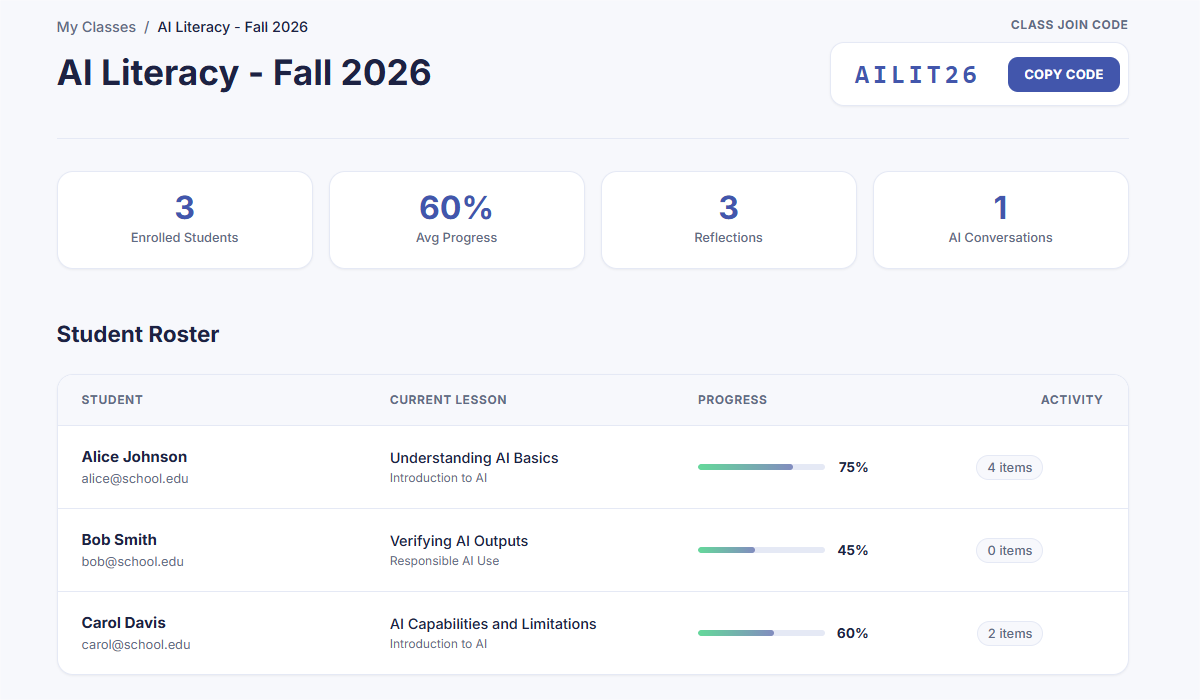
See each student's progress through the course. Know who's completed which modules, which activities, and where they might be stuck.
Reflection review
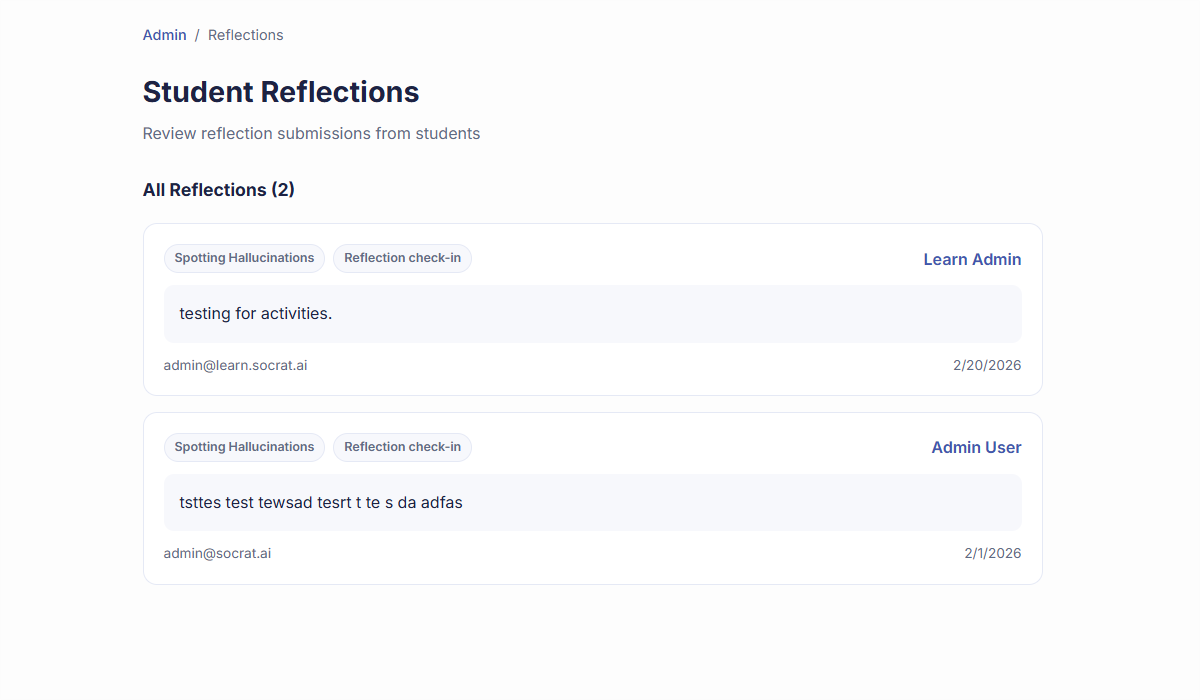
Read what students write in their reflection activities. These aren't auto-graded — they're opportunities for you to see how students think about AI and provide coaching.
Mastery verification
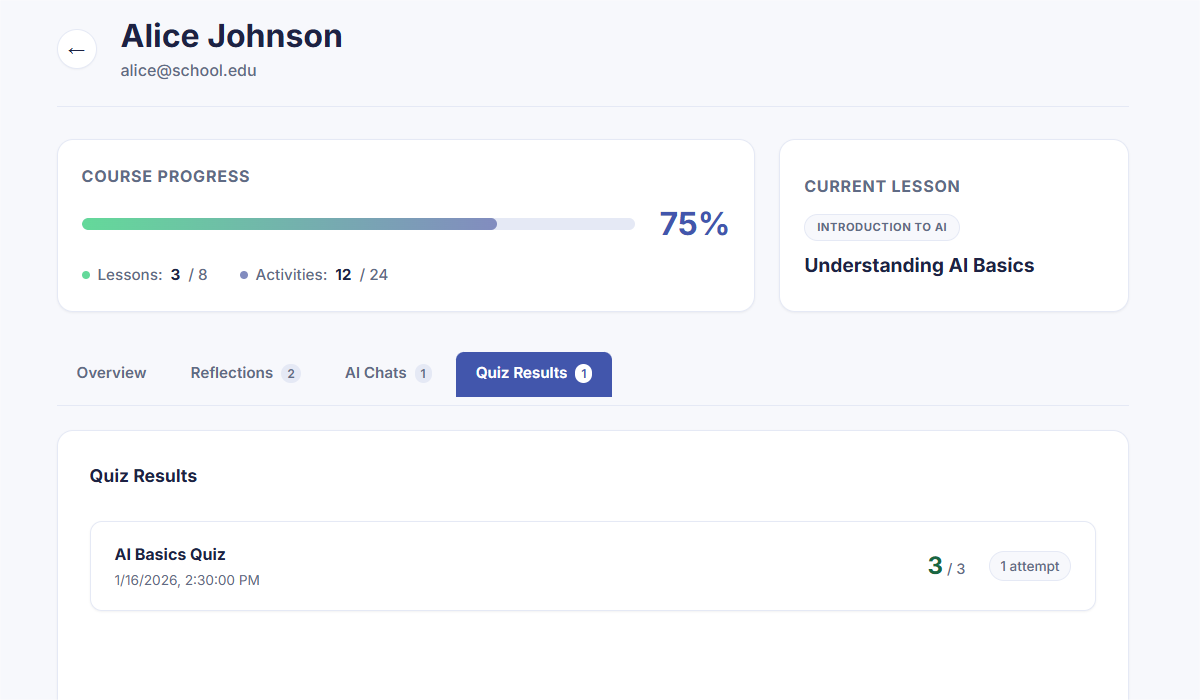
Streak quizzes require students to get multiple questions right in a row. You can see their streak progress — not just whether they eventually passed.
What your students will learn
A structured curriculum covering the AI literacy skills they actually need.
AI Basics
Fundamentals of AI, how it works, and its role in everyday life.
AI’s Capabilities Today
What modern AI can and cannot do; real-world applications.
Where AI Goes Wrong
Identifying incorrect or misleading information and understanding common errors.
Being a Responsible User of AI
Ethical AI use, transparency, accountability, and integrity.
AI Plagiarism and How to Avoid It
Risks of AI-assisted plagiarism, originality, and proper attribution.
Protecting Yourself and Your Data
Safe AI usage, data privacy risks, and protecting personal information.
Being a Productive User of AI
Using AI as a supportive tool to enhance productivity and problem-solving.
What to Look Out for in a World of AI
Broader societal impact of AI, biases, and future implications.
Three activity types that build real skills
Each module includes hands-on practice, not just videos.
Streak Quizzes
Streak quizzes are knowledge checks that require consecutive correct answers to pass. This ensures students actually understand the material, not just guess their way through.
Custom AI Interactions
Students use AI for writing tasks while following specific guidelines: asking for feedback instead of generation, verifying suggestions, and maintaining their own voice. The activity enforces responsible patterns.
Reflections
Students write about what they learned and how they'll apply it. These responses go to teachers, creating opportunities for coaching and discussion about responsible AI use.
Why teach AI literacy this way?
Banning AI doesn't work
Students are going to use AI. The question is whether they use it well or poorly. Teaching responsible use is more effective than prohibition.
Skills matter more than rules
"Don't use AI to cheat" isn't a skill — "Know when AI is wrong" is. This course builds skills students can use their whole lives.
Visibility changes behavior
When students know you can see their reflections and progress, they engage more thoughtfully. Accountability drives learning.
Ready to teach AI literacy?
Create your teacher account and set up your first classroom today! It's free to start.